
Re-gifting happens more often than most people admit. It is not rude. It is not cheap. It is practical. When done with care, it turns something forgotten into something useful again.
Research shows that people tend to overthink the reaction of the original giver. In truth, most rarely mind — or even notice. Re-gifting saves money, reduces clutter, and helps the environment by cutting waste.
The key is intent and timing. When done thoughtfully, re-gifting is less about passing things along and more about giving them a new life. It is a simple act that can still feel meaningful — for both the giver and the receiver.
What Is Re-Gifting Exactly
Re-gifting means giving someone a present that was originally given to you. It must be unused, in perfect condition, and presented as if it were new. This is not about passing along leftovers. It is about turning a good but mismatched gift into one that suits another person better.
Psychologists call this the “reformulation stage” of gift-giving. It is when the recipient decides what to do with an item after the first exchange. Many people feel nervous about this step because it challenges a deep cultural belief: that every gift should be personal and sacred.
But here is the truth. Once you receive a gift, it is yours. You can use it, keep it, donate it, or re-gift it. The key is to do it with thought and respect. Done right, re-gifting is not rude. It is smart, sustainable, and emotionally intelligent.
What Kinds of Gifts Are Safe to Re-Gift
Some items make perfect re-gifts. Others should never leave your house again. The difference lies in how personal or generic the gift is.
| Type of Item | Example | Safe to Re-Gift? | Risk Level |
|---|---|---|---|
| Generic | Candle set, unopened wine | Yes | Very Low |
| Specific | Small kitchen appliance | Yes | Medium |
| Personalized | Mug with initials | No | High |
| Handmade | Knitted scarf or art piece | No | Very High |
A re-gift should feel genuine. It must look like a thoughtful choice, not a quick escape. Inspect the item carefully. Make sure it is clean, sealed, and timeless.
Do People Actually Get Offended by Re-Gifting
Most people do not.
Research shows that givers care far less about re-gifting than recipients imagine. When asked, most said they would rather have their gift passed on to someone who enjoys it than thrown away. The anxiety around re-gifting comes from the fear of being caught, not the act itself.

When you think about it, it makes sense. The purpose of a gift is joy. If that joy happens through someone else, then the gift has done its job.
So instead of worrying about etiquette, focus on respect. A thoughtful re-gift, handled privately and tastefully, rarely offends anyone.
When Re-Gifting Is a Good Idea
Re-gifting is smart when it saves resources and creates value for someone new. It works best when:
- The item is brand-new and unopened
- The new recipient will truly appreciate it
- The original giver will never see it again
A re-gift should not be about clearing space. It should be about connection.
Imagine this: you received a luxury wine opener, but you do not drink. Your friend collects fine wines. Passing that opener to them turns a mismatched gift into a perfect one.
That is the essence of thoughtful re-gifting — fit over form.
If you enjoy exploring meaningful gifts like this, you may love our post on How to Choose the Perfect Gift for Someone Who Has Everything. It expands on how to match items to personality and purpose.
How to Re-Gift Without Getting Caught
The secret is simple: preparation and distance.
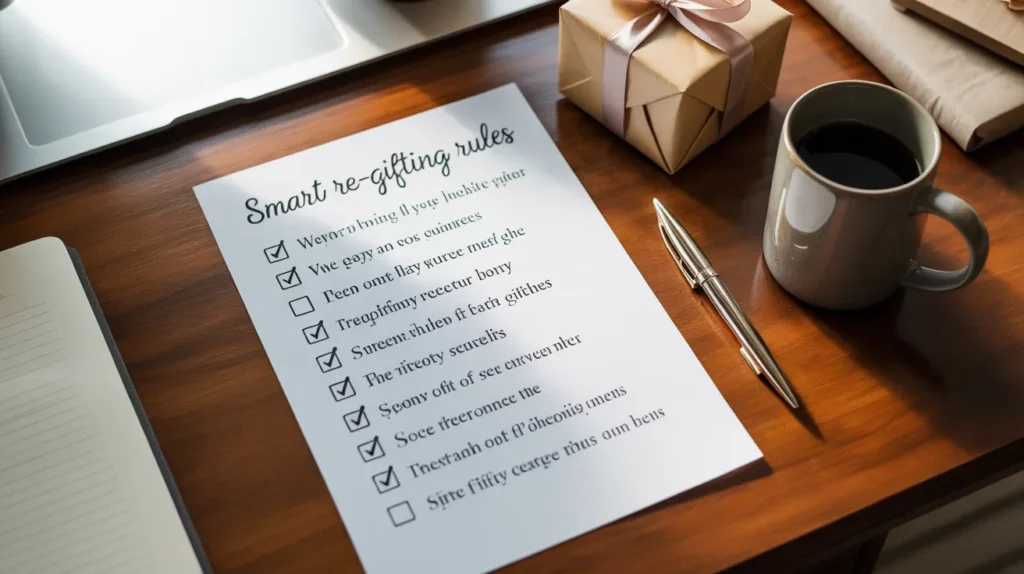
The biggest mistake is re-gifting within the same friend or family circle. Keep your circles separate. If the original giver and new recipient never cross paths, you are safe.
Steps for a Clean Re-Gift
- Remove All Labels: Take off every tag, sticker, or personal note.
- Inspect Thoroughly: Make sure no names or initials are hidden inside the packaging.
- Rewrap Properly: Use fresh wrapping paper and a new card. Never reuse the original packaging.
- Keep a Record: Note who gave you the item and who received it from you. It prevents future mistakes.
These simple habits protect your reputation and keep every exchange feeling genuine.
Gifts You Should Never Re-Gift
Some gifts carry emotional value that cannot be transferred. Passing them along feels cold and careless. Avoid re-gifting anything that fits the following categories:
- Handmade or sentimental items
- Personalized gifts with names or initials
- Used or opened items
- Dated gadgets or trends
- Family heirlooms
If an item falls into one of these categories, do not force it. Instead, donate it or keep it as a memory. Giving away personal items crosses the line between thoughtful and thoughtless.
Why People Still Fear Re-Gifting
People fear re-gifting because it challenges how we think about relationships.

Givers focus on emotion — they imagine your reaction and hope their choice feels special. Recipients focus on usefulness — they want something practical. When these expectations do not align, both feel uneasy.
The truth is, the giver’s emotional investment ends once the gift is given. You own the item and can decide what to do with it. Normalizing this truth is how we end the re-gifting taboo.
The Psychology Behind an Unwanted Gift
Psychology tells us that most recipients hide disappointment out of kindness. They value the gesture, even when the item misses the mark.
Re-gifting often brings guilt because people feel they are betraying that gesture. Yet studies show that this guilt is misplaced. The giver has already moved on. What matters most is intention — re-gifting should come from the desire to make someone else happy, not to get rid of clutter.
If you want to understand the emotional side of giving, explore our guide on The Psychology of Gifting: Why Giving Feels Better Than Receiving. It offers powerful insights into why sharing feels so rewarding.
Re-Gifting vs. Donating: How to Choose
Re-gift when the item is new and perfect for a specific person. Donate when it is good but not gift-worthy. Throw it away only if it is broken or beyond repair.
| Outcome | Item Type | Social Risk | Financial Benefit |
|---|---|---|---|
| Re-Gift | New, sealed, perfect for one person | Low | Saves cost |
| Donate | Gently used, generic, dated | None | Supports charity |
| Discard | Broken or unusable | None | None |
When in doubt, be honest with yourself. If you would not be happy receiving the item, donate it instead. That choice still honors the spirit of giving.
FAQ
Q: Is re-gifting rude today?
A: No. Etiquette now sees it as practical and thoughtful when done right.
Q: Can I re-gift to family?
A: Yes, but only outside shared circles. Avoid recognition risks.
Q: What gifts should I never re-gift?
A: Anything personal, handmade, opened, or deeply sentimental.
Q: Does re-gifting save money?
A: Absolutely. Many people re-gift as a smart way to reduce holiday spending and waste.
If you are looking for fresh, reliable inspiration, explore our Holiday Gift Guides for 2025. Each guide helps you find high-quality gifts that fit every personality — no guesswork, no guilt.